Fire and Smoke Damage Restoration Honolulu Hawaii | Full Property Recovery
Soot removal, odor elimination, HVAC decontamination, and complete structural restoration. Licensed and insured in Hawaii.
Quick Answer
Fire and smoke damage restoration covers soot removal from walls, ceilings, and surfaces, odor elimination using thermal fogging and hydroxyl generators, decontamination of HVAC systems, remediation of firefighting water damage, and full structural and content restoration. Rooms adjacent to the fire zone often carry smoke damage even without direct flame exposure, requiring inspection throughout the property.
Request a Free Fire Damage Assessment
Fire and Smoke Damage Restoration in Honolulu, HI
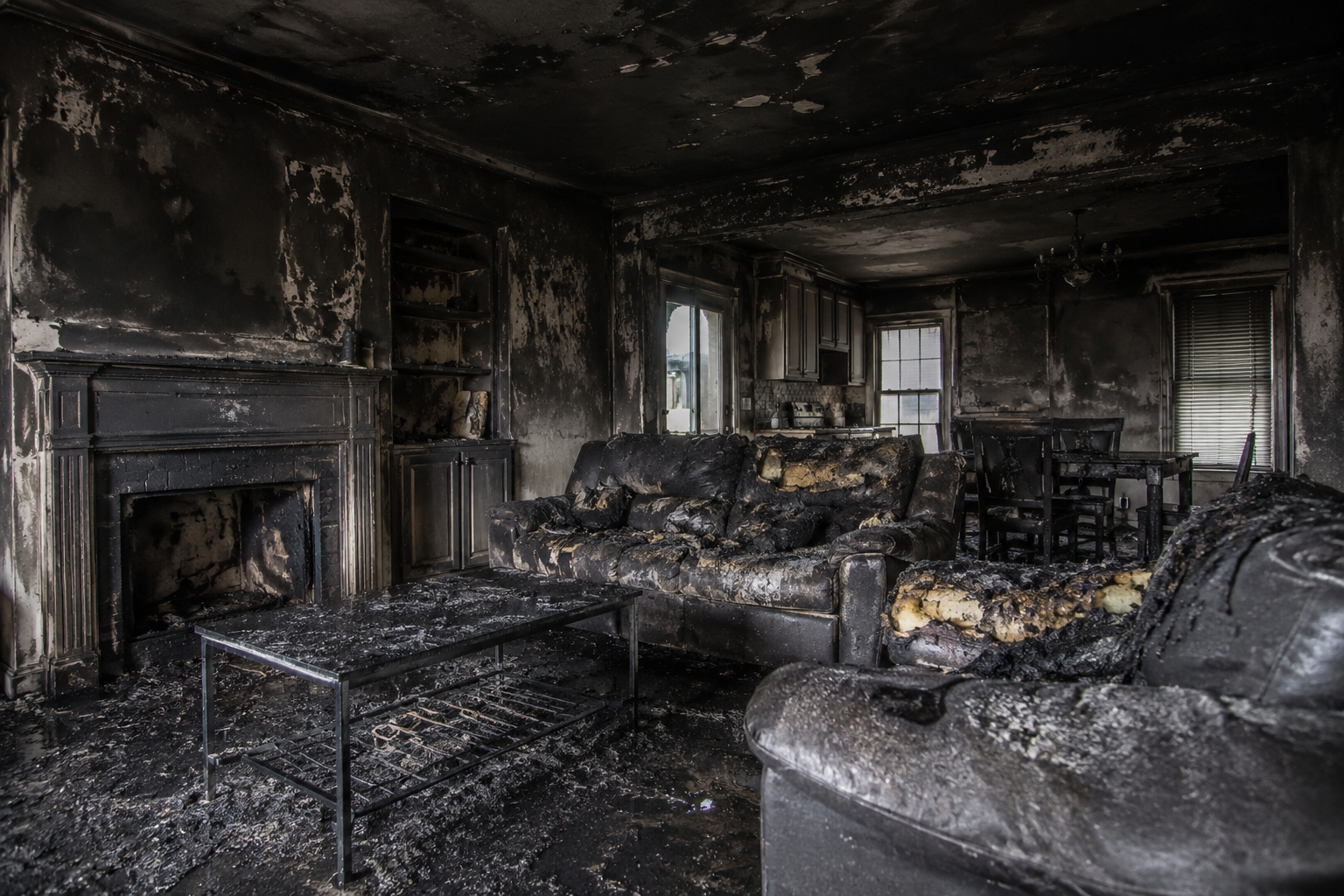
A house fire creates three distinct damage types that all require professional attention: direct fire damage, smoke and soot damage, and water damage from firefighting. Most homeowners focus on the visible fire damage. The smoke and the water are often more widespread and, if left untreated, more expensive.
Smoke does not stay in the room where the fire occurred. It travels through the HVAC system, seeps under doors, and migrates through wall cavities to adjacent spaces within minutes. By the time the fire is out, smoke residue has typically reached every room in the home through the duct system. That residue is acidic and continues to corrode metal surfaces, etch glass, and permanently stain finishes for weeks after exposure if not cleaned promptly.
In Hawaii’s humid climate, smoke odor is particularly persistent. The moisture in the air bonds with smoke particles embedded in porous materials like drywall, carpeting, wood framing, and soft furnishings. Surface cleaning does not eliminate odor because the source is inside the material, not on the surface. Effective odor elimination requires thermal fogging, hydroxyl generation, or ozone treatment to penetrate and neutralize smoke compounds within porous materials.
The Hidden Scope of Fire Damage
HVAC system contamination. Your HVAC system pulls air from every room in the home. During a fire, it pulls smoke and soot particles into the ductwork, the air handler, and the coils. After a fire, if you run the HVAC system without decontamination, you distribute soot and smoke compounds to every room it serves. All HVAC systems affected by fire need to be inspected, cleaned, and often have filters and coils replaced before they are safe to operate.
Firefighting water damage. Significant fire suppression efforts can introduce hundreds of gallons of water into a structure. In Honolulu’s humid climate, that water combines with the ambient moisture to create near-certain mold risk within 24 to 48 hours. Water damage restoration and mold prevention run simultaneously with smoke cleanup in any substantial fire job.
Structural assessment. Fire weakens structural members. Char damage to load-bearing framing, compromised connections, and heat-affected concrete or masonry must all be assessed by a licensed contractor before reconstruction begins. We coordinate with licensed building contractors and your insurance adjuster to ensure structural repairs are scoped correctly.
Related services: water damage restoration and mold remediation in Honolulu.
Fire and Smoke Restoration Process
- Emergency Board-Up and Securing We secure the property immediately after the fire department clears the scene. Open windows, doors, and damaged walls are boarded or tarped to prevent further weather exposure and unauthorized entry.
- Damage Assessment and Documentation Every affected room and system is photographed and documented. Soot mapping identifies areas of heavy vs. light contamination. This documentation forms the backbone of your insurance claim.
- Soot and Residue Removal Dry soot is removed before wet cleaning to prevent smearing. Chemical sponges, HEPA vacuums, and specialized cleaning agents appropriate for each surface type are applied. Incorrect cleaning chemistry can permanently set soot into finishes.
- HVAC Decontamination All ducts, filters, coils, and air handling components are cleaned, sanitized, and tested before the system is returned to service.
- Odor Elimination Thermal fogging, hydroxyl generators, or ozone treatments are deployed to penetrate porous materials and neutralize smoke odor compounds. The method is selected based on property occupancy and material types.
- Water Damage Remediation and Mold Prevention All firefighting water is extracted, structural drying equipment is deployed, and moisture readings are monitored until materials reach safe levels.
Fire and Smoke Damage Service Area
We respond to fire and smoke damage calls throughout all of Oahu, including residential properties, multi-family housing, and commercial buildings.
Fire and Smoke Damage Questions
Yes. Fire and smoke damage is a covered peril under standard homeowners insurance in Hawaii. This includes the cost of extraction and drying for firefighting water, soot and smoke cleanup, odor remediation, content restoration or replacement, and structural repairs. You will be responsible for your deductible. We document everything your adjuster needs and can bill your carrier directly.
Effective smoke odor elimination requires treating the source, not just the surface. Smoke odor comes from particles embedded in porous materials. We use thermal fogging to penetrate those materials with deodorizing agents and hydroxyl generators to create oxidizing reactions that break down odor molecules. Simply airing out or painting over smoke odor does not work, and the smell will return when humidity activates the embedded particles.
Smoke reaches areas the fire never touched and causes damage that continues after the fire is out. Soot is acidic and actively corrodes metal, etches glass, and permanently stains surfaces if not cleaned promptly, often within 24 to 48 hours. Smoke compounds are also toxic and accumulate in HVAC systems, distributing harmful particles through the home each time the system runs. The combination of smoke corrosion and untreated water damage from firefighting efforts is what drives most of the total loss in a fire claim.
Emergency stabilization, including board-up, extraction, and initial cleaning, is completed in the first 1 to 3 days. Full smoke remediation, odor treatment, and water damage drying typically requires 5 to 10 days depending on the size of the fire and scope of damage. Structural reconstruction, handled by a licensed general contractor, is a separate phase and timeline that follows once restoration is certified complete.