Water Damage Restoration Honolulu Hawaii | We Respond Fast
IICRC-certified extraction and structural drying. On site within 60 minutes. All insurance accepted.
Quick Answer
Water damage restoration in Honolulu typically takes 3 to 7 days for residential properties, depending on damage severity and affected materials. Structural drying alone requires a minimum of 3 days to reach safe moisture levels. Hawaii’s high humidity can extend drying time by 1 to 2 additional days compared to drier climates, so professional equipment is essential from the first hour.
Request a Free Water Damage Assessment
Professional Water Damage Restoration in Honolulu, HI
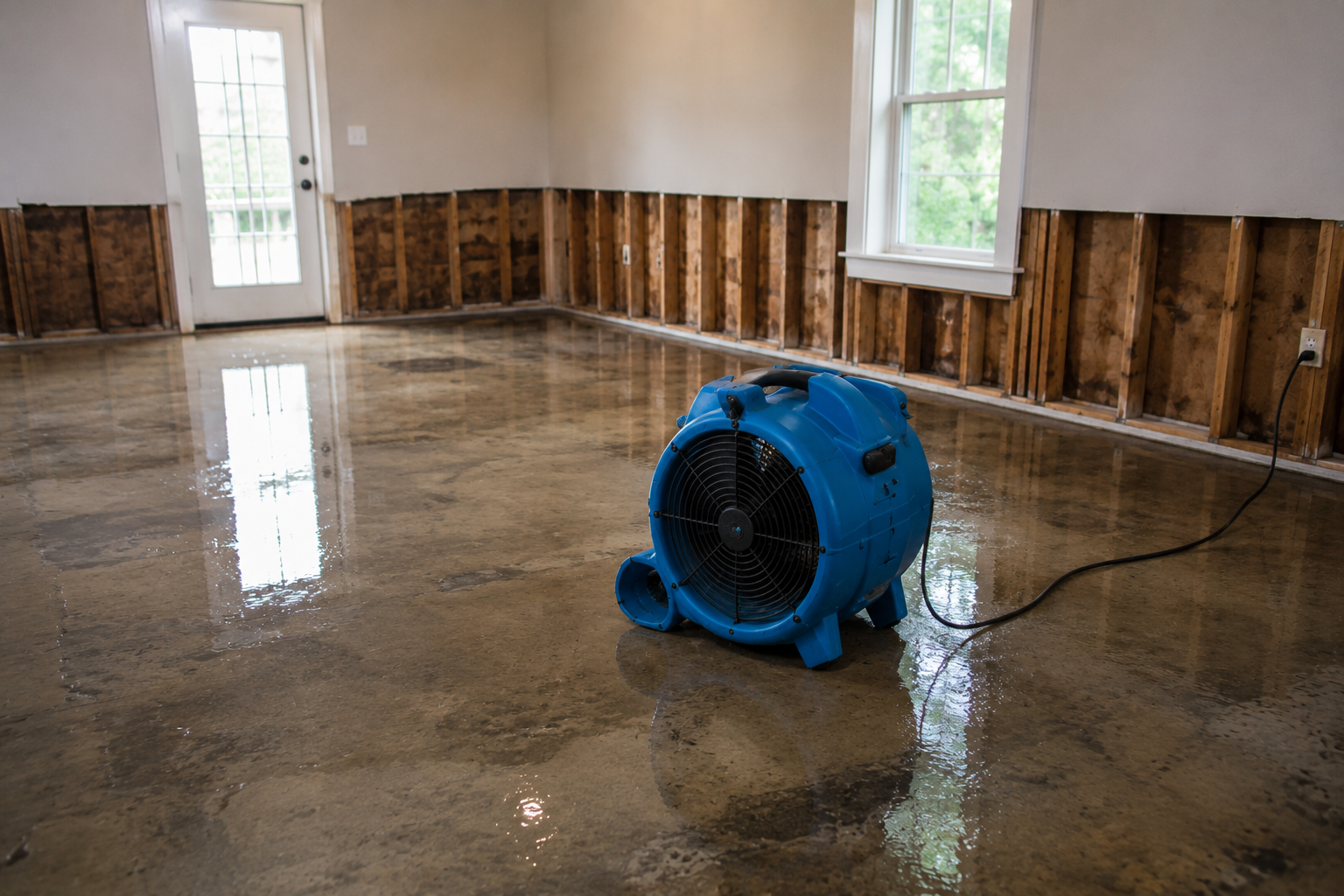
Water damage restoration is a precise, equipment-intensive process. It is not drying out a floor with box fans. Done correctly, it means extracting all standing water, placing calibrated dehumidifiers and air movers at calculated intervals, monitoring moisture readings in structural materials daily, and confirming everything reaches safe moisture levels before any reconstruction begins.
Honolulu properties face a specific challenge. The island’s climate sits at high humidity year-round, which means moisture does not evaporate naturally from building materials. A soaked wall cavity in a Kaimuki bungalow or a wet subfloor in a Kaneohe townhome needs professional drying equipment running continuously for days. Without it, mold follows. In Hawaii, that window is 24 to 48 hours.
We use truck-mounted and portable extractors, industrial air movers, and LGR dehumidifiers rated for high-humidity environments. All equipment placement is calculated using psychrometric principles as required by the IICRC S500 Standard. This is the same standard your insurance adjuster will reference when reviewing your claim.
Every job includes a full moisture mapping report with before and after readings. This documentation protects you during the insurance process and confirms the restoration was completed properly. We do not close a job until every structural member reads at acceptable moisture content.
Our Six-Step Water Damage Restoration Process
Every job follows a structured process developed from IICRC standards and years of experience restoring Honolulu and Oahu properties.
- Emergency Response and Site Assessment We arrive within 60 minutes, assess the extent of damage, identify the water source category (clean, gray, or black water), and establish a scope of work.
- Water Extraction Truck-mounted or portable extractors remove standing water from all affected areas. This step is critical. Every gallon removed by machine is moisture that does not have to be dried out of structural materials.
- Moisture Mapping and Documentation We use thermal imaging cameras and calibrated moisture meters to map all affected areas, including walls, subfloors, and ceiling assemblies. This creates the baseline for your insurance claim documentation.
- Structural Drying Setup Air movers and LGR dehumidifiers are placed according to calculated drying science. Equipment runs continuously until readings confirm materials have reached safe moisture content. In Honolulu, this typically takes 3 to 5 days.
- Daily Monitoring and Reporting We return daily to record moisture readings, adjust equipment placement, and log all data. These logs are submitted to your insurance carrier as part of the claims package.
- Clearance and Reconstruction Readiness Once all materials confirm at safe moisture levels, we provide a signed clearance report. Reconstruction can then proceed on a documented dry structure.
Why Response Time Matters in Honolulu
Water damage is an accelerating problem. The first hour after a water intrusion event is when you have the most options and the lowest costs. Within 1 to 2 hours, drywall begins to swell and weaken. Within 24 hours, mold spores present in the environment, and they are always present in Hawaii’s humid air, find the moisture they need to colonize. Within 48 to 72 hours in a high-humidity climate, secondary mold damage can exceed the original water damage in cost.
A standard homeowners policy covers sudden and accidental water damage. But if documentation shows that moisture sat untreated for an extended period, carriers may dispute the claim or limit coverage. Our 60-minute response time and same-day documentation protect your claim from the start.
See related services: flood cleanup in Honolulu, mold remediation, and emergency water damage response.
Working with Your Insurance
Most homeowners in Honolulu are insured through standard property carriers including State Farm, Allstate, USAA, Farmers, and local Hawaii providers such as First Insurance Company of Hawaii. We work directly with all of them.
When you call us, one of the first things we do is help you open a claim if you have not already. We then provide the carrier with the documentation they need: photo evidence, moisture readings, equipment logs, and a line-item scope of work. We use Xactimate, the same estimating platform used by most adjusters, which reduces back-and-forth and speeds up approvals.
You pay your deductible. We handle everything else. If a dispute arises, we have experience working through the supplemental claim process and can advocate on your behalf.
For more on related topics, see our blog posts on Honolulu water damage and our overview of burst pipe water damage in Hawaii.
Water Damage Restoration Service Area
We serve all communities across Oahu within a 50-mile radius of Honolulu. No matter where you are on the island, we can reach you within 60 minutes.
Water Damage Restoration Questions
Most residential properties in Honolulu require 3 to 5 days of continuous equipment operation to reach safe structural moisture levels. Larger jobs, or situations where water penetrated wall cavities or multiple floor layers, can take 5 to 7 days. Hawaii’s humidity slows the drying process compared to drier climates, which is why we use LGR dehumidifiers specifically rated for high-humidity conditions.
Not always. In most cases, residents can remain in the home while equipment runs. We seal off affected areas and establish containment when needed. If the water source was Category 3 (sewage or floodwater with contamination), temporary relocation may be recommended for health reasons. We will advise you honestly based on what we find on site.
We use truck-mounted extractors for rapid water removal, followed by industrial-grade air movers and LGR (Low Grain Refrigerant) dehumidifiers. LGR units are specifically designed for humid environments and remove significantly more moisture per day than standard dehumidifiers. Equipment quantity and placement is calculated based on the affected area’s square footage and moisture readings.
The only accurate way to confirm a structure is fully dry is with calibrated moisture meters that measure moisture content inside walls and subfloors, not just the surface. We take readings every day until all structural members reach the target moisture content specified by the IICRC S500 standard. We then provide you with a signed clearance report before any reconstruction begins.