
Mold Remediation Honolulu Hawaii | Find It, Remove It, Keep It Gone
IICRC-certified mold removal with containment, HEPA filtration, and clearance testing. Licensed in Hawaii.
Quick Answer
Mold remediation in Honolulu typically takes 1 to 5 days depending on affected area size and material type. In Honolulu’s climate, mold colonies can establish within 24 to 48 hours of water intrusion. A single affected room takes 1 to 2 days. Multi-room or structural jobs require 3 to 5 days. Post-remediation clearance testing confirms the job is complete.
Schedule a Free Mold Assessment
Mold Remediation in Honolulu, HI
Mold in a Honolulu home is not a maintenance issue. It is a health and structural issue that requires a defined remediation process. The EPA and IICRC publish standards for mold remediation for good reason: improper removal spreads spores to unaffected areas and creates a larger problem than the one you started with. See EPA guidance on mold for foundational information.
Hawaii’s climate creates perfect mold conditions year-round. Average relative humidity in Honolulu sits around 63 to 70 percent, with windward areas running higher. Temperatures stay warm year-round. Mold needs three things to grow: moisture, organic material like wood or drywall, and a temperature above 40 degrees Fahrenheit. Honolulu provides two of those three things constantly. All it needs is a water event to provide the third.
Once mold begins growing, it can colonize to visible levels within 24 to 48 hours under these conditions. A slow pipe leak behind a wall, a weeping window frame, or a minor roof penetration can produce a significant mold problem in a matter of days without any visible signs from the living space. By the time you smell it or see it, it has typically been growing for at least a week.
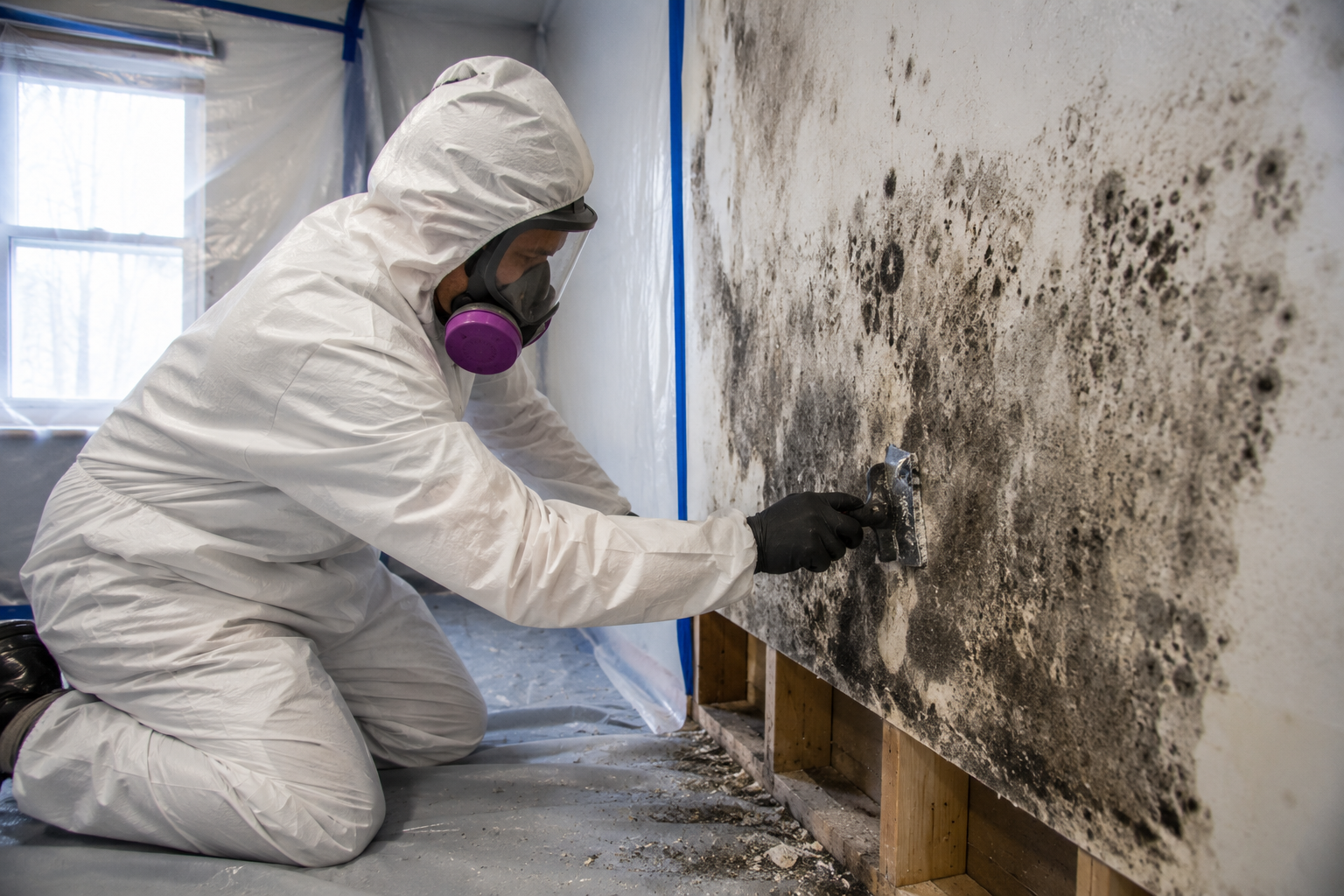
Why Hawaii Accelerates Mold Growth
Every restoration professional in Hawaii will tell you the same thing: mold moves faster here than anywhere on the mainland. There are specific reasons for this.
Humidity. Honolulu’s ambient humidity means that even after water extraction, the air itself re-introduces moisture into building materials unless dehumidification is running continuously. A room that would dry in 3 days in Phoenix takes 5 to 7 days in Honolulu without commercial-grade equipment.
Temperature. Mold growth accelerates in temperatures between 70 and 90 degrees Fahrenheit. Honolulu’s year-round temperature range sits precisely in that window. There is no cold season to slow the process.
Older housing stock. Many Honolulu homes were built in the 1950s and 1960s. Wood framing from that era is untreated and highly susceptible to mold when it gets wet. Plaster walls, common in pre-1970 construction in neighborhoods like Nuuanu, Punchbowl, and Kaimuki, absorb moisture readily and hide mold growth behind the surface before you can see any discoloration.
See also: water damage restoration and flood cleanup services.
Our Mold Remediation Process
- Assessment and Moisture Source Identification We inspect all affected areas using moisture meters and thermal cameras to locate mold growth and identify the moisture source. If the source is not fixed, the mold will return.
- Containment Setup Polyethylene containment barriers are erected around the work area. Negative air pressure is established using air scrubbers with HEPA filtration to prevent cross-contamination to unaffected areas of the property.
- Controlled Demolition All mold-affected porous materials, including drywall, insulation, and carpet, are removed and sealed in disposal bags before being carried out through the containment. These materials cannot be cleaned, they must be removed.
- HEPA Vacuuming and Surface Treatment All structural surfaces within the containment are HEPA vacuumed, then treated with EPA-registered antimicrobial solutions. Wire brushing is applied where needed on wood framing.
- Drying and Moisture Control Dehumidifiers and air movers run to bring structural moisture to acceptable levels, eliminating the conditions that caused mold in the first place.
- Clearance Testing Post-remediation air and surface samples confirm that mold counts within the remediated area are at or below outdoor background levels. We provide a clearance report that satisfies insurance and real estate disclosure requirements.
Why DIY Mold Removal Fails in Honolulu
Bleach does not kill mold. That is not an opinion. The EPA and IICRC both state that chlorine bleach is ineffective on porous materials because it cannot penetrate the surface. You bleach the visible surface, the mold goes dormant briefly, and it grows back within days in Hawaii’s humidity. The root structure remains intact inside the material.
Beyond ineffectiveness, DIY mold removal without containment spreads spores. Disturbing mold without negative air pressure causes spore counts in adjacent rooms to spike dramatically. Those spores settle on surfaces and find the next moisture source. You treat one room and create three more problems.
Mold also presents real health risks, particularly for residents with respiratory conditions, allergies, or immune sensitivities. Sustained mold exposure in enclosed spaces causes respiratory symptoms, headaches, and in some cases more serious health consequences, especially for children and elderly residents.
Mold Remediation Service Area
We provide mold remediation services across all of Oahu, with same-day assessments available in most areas.
Mold Remediation Questions
A single affected room typically takes 1 to 2 days including setup, demolition, treatment, and drying. A multi-room job or one involving wall cavity mold that requires partial demo of multiple walls can take 3 to 5 days. Large or complex remediation projects in commercial properties or extensively affected homes may run longer. We provide a timeline estimate during the initial assessment before any work begins.
In many cases, yes, if the affected area is contained and occupants are not sensitive to mold. We establish full containment with negative air pressure, which prevents spores from reaching unaffected living areas. However, if mold is present in HVAC systems, multiple rooms, or high-surface-area locations, temporary relocation may be advisable, particularly for households with children, elderly occupants, or anyone with respiratory conditions.
Mold grows fastest in warm, humid environments with available organic material. Honolulu provides all three conditions year-round. Average humidity in the 63 to 70 percent range, temperatures consistently in the 70s and 80s, and older wood-frame construction in many neighborhoods create ideal mold conditions. Any water intrusion that is not professionally dried within 24 to 48 hours carries significant mold risk in this climate.
Properly remediated mold will not return if the moisture source that caused it is also addressed. Mold remediation removes the mold, but if the leak, the high humidity, or the condensation problem that created moisture is not fixed, new mold will eventually grow. We identify and document the moisture source as part of every remediation job and can recommend corrective actions. Clearance testing confirms the remediation was successful before reconstruction begins.