
5 Things Every Honolulu Homeowner Should Know About Flood Zones and Flood Insurance
Most Oahu homeowners discover they are in a flood zone or that they are uninsured for flood damage at exactly the wrong moment. Here is what to know before that happens.
Quick Answer
To find out if your Honolulu home is in a FEMA flood zone, search your address on the FEMA Flood Map Service Center at msc.fema.gov. Properties in Zone AE or VE are high-risk and require flood insurance if federally backed mortgages are involved. Standard homeowners insurance does not cover flood damage in any zone, and NFIP policies carry a 30-day waiting period before coverage takes effect.
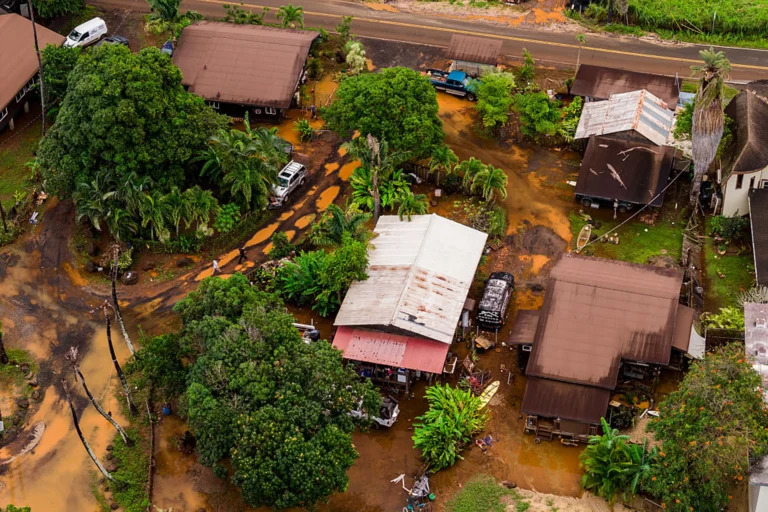
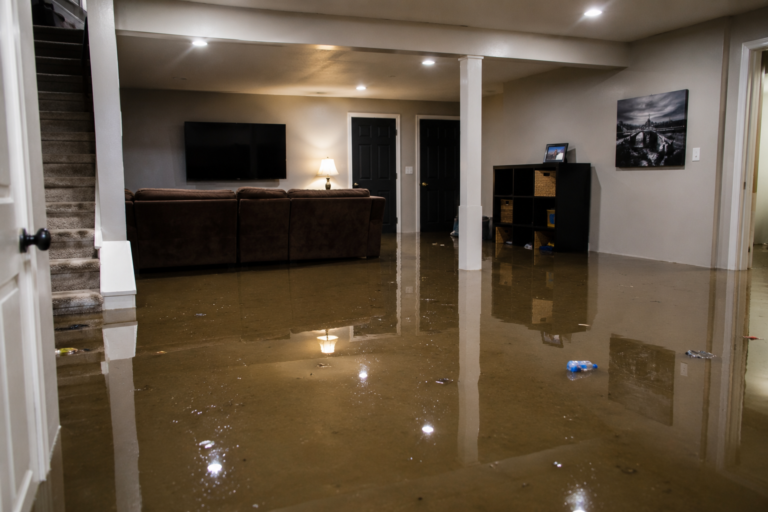
In 12 years of restoring water-damaged properties across Oahu, there is one conversation I have more than any other. It happens after a Kona Low, or after Manoa Stream backs up into Oahu Avenue, or after a neighborhood near the Ewa Plain takes on a foot of water during a heavy rain event. The homeowner has flood damage. They call their insurance agent. They find out their standard homeowners policy does not cover it. Some of them have flood insurance. A lot of them do not.
That conversation is avoidable. Here are the 5 things every Honolulu homeowner should understand about flood zones and flood insurance before the water arrives.
1. How to Find Out If Your Property Is in a FEMA Flood Zone
FEMA maintains the official flood zone maps for the United States, including all of Oahu, through the Flood Map Service Center. You can look up any address at msc.fema.gov. The result will show your property’s flood zone designation, which determines your risk level and whether flood insurance is required by your mortgage lender.
The primary zone designations you will encounter on Oahu:
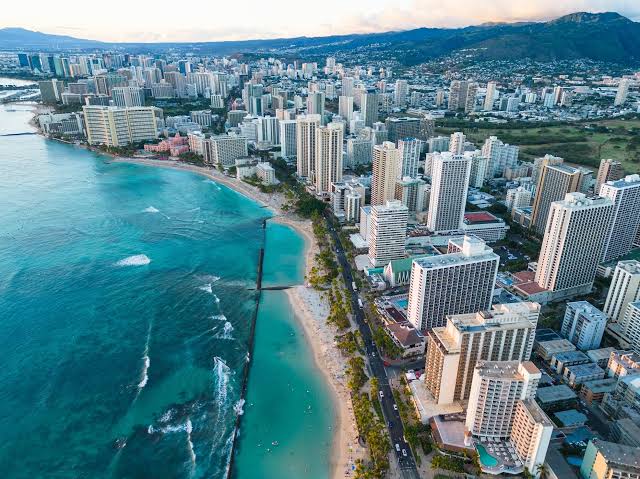
Zone AE. High-risk area with a 1 percent annual chance of flooding, also called the 100-year floodplain. If your property has a federally backed mortgage and sits in Zone AE, flood insurance is mandatory. Many properties along Manoa Stream, Nuuanu Stream, Palolo Stream, Kapalama Canal, and the low-lying coastal areas of Waikiki and Ewa carry Zone AE designations.
Zone VE. High-risk coastal area with the same 1 percent annual flood probability as AE, plus wave action. Properties along Honolulu’s south-facing shoreline, parts of Waikiki, and beachfront communities in Hawaii Kai and the North Shore may carry VE designations. These zones carry higher insurance premiums because of the combined flood and wave damage risk.
Zone X (shaded). Moderate risk area with a 0.2 percent annual flood probability. Not required, but flood insurance is available and often advisable, particularly in neighborhoods with documented flooding history that does not meet the AE threshold on official maps.
Zone X (unshaded). Minimal flood risk per FEMA maps. Flood insurance is still available through NFIP but is often less expensive. Properties in unshaded X zones can and do flood during extreme rainfall events. The map reflects statistical probability, not a guarantee against flooding.
2. Your Standard Homeowners Policy Does Not Cover Flood Damage
This is the most important thing to understand, and the one most homeowners discover too late. Standard homeowners insurance in Hawaii, and in every other state, explicitly excludes flood damage. The flood exclusion applies regardless of your flood zone designation. It applies to Zone AE properties and Zone X properties equally. If water enters your home from rising streams, storm surge, overland flow during heavy rain, or backed-up storm drains, your standard policy pays nothing for that damage.
This surprises many homeowners because their standard policy does cover some water damage, specifically sudden and accidental water intrusion from internal plumbing failures, appliance leaks, and roof breaches caused by wind. The line between covered and excluded water damage comes down to the entry pathway: water that enters through a storm-damaged roof opening may be covered; water that rises from the ground is not.
When you call after a flood and we ask for your insurance information, one of the first things we clarify with you is which type of policy covers the specific damage we are documenting. It matters. The documentation packages for a homeowners claim and an NFIP flood claim are structured differently, and the adjuster review processes are separate. Getting this right from the start prevents significant delays in your claim payment.
3. The NFIP’s 30-Day Waiting Period Is Real and It Will Catch You Off Guard
The National Flood Insurance Program requires a 30-day waiting period before a new policy takes effect. There is no exception for threatening weather. When a hurricane watch is issued for Oahu or a Kona Low is forecast, it is too late to buy coverage for that event. A policy purchased today provides no protection until 30 days from now.
There are a small number of exceptions to the waiting period: a new NFIP policy purchased in connection with the origination of a mortgage or loan typically takes effect immediately. A policy purchased following a LOMA (Letter of Map Amendment) that removes a property from a mandatory purchase zone may also have a reduced waiting period in specific circumstances. But for the typical Honolulu homeowner purchasing flood insurance outside of a mortgage transaction, the 30-day wait applies without exception.
The practical implication is that flood insurance needs to be purchased during calm weather, before the storm season, with enough lead time to satisfy the waiting period. If you do not currently have flood insurance and storm season is within 30 days, you are unprotected for this cycle. Buy the policy today for the next one. FEMA’s flood insurance guidance is available at ready.gov/floods.
4. Flood Zone Maps Do Not Capture the Full Flood Risk for Many Honolulu Neighborhoods
FEMA flood maps are built from engineering studies of historical flood data and hydrological modeling. They are meaningful tools, but they have documented limitations that are particularly relevant in Honolulu.
Many Oahu flood maps have not been comprehensively updated in 15 to 20 years. Development patterns, channel modifications, and infrastructure changes over that time have altered how water moves through watersheds in ways the existing maps do not capture. Neighborhoods that flooded significantly during the April 2018 North Shore flooding event, the March 2021 Manoa flooding event, and other recent extreme rainfall events include properties that FEMA maps classify as low to moderate risk.
The neighborhoods with the most documented history of flooding that extends beyond their official FEMA flood zone boundaries on Oahu include: the full Manoa Valley floor, properties within two blocks of Nuuanu Stream below the Pali Highway, Palolo Valley below the park, lower Kalihi near Kapalama Canal, the low-lying streets of Ewa Beach near the agricultural drainage channels, and beachside communities in Waimanalo. If you live within a quarter mile of any moving waterway in Honolulu, a flood zone check is worth doing regardless of what you assume about your neighborhood’s designation.
5. Private Flood Insurance Is an Alternative Worth Comparing
The NFIP is not your only option for flood insurance coverage in Hawaii. A growing number of private flood insurance carriers offer policies that can be more flexible, more competitively priced, and higher in coverage limits than NFIP policies. NFIP building coverage maxes out at $250,000 for residential structures and $100,000 for contents. For higher-value properties in Kahala, Hawaii Kai, or along the Kahala and Diamond Head corridors, those limits may not be adequate.
Private flood policies can offer replacement cost value coverage rather than actual cash value for contents, higher building limits, and in some cases a shorter waiting period than the NFIP’s 30-day requirement. Private policies are generally accepted by mortgage lenders in place of NFIP policies, though you should confirm this with your lender before switching.
For state-level questions about flood insurance options, coverage requirements, and carrier licensing in Hawaii, the Hawaii Insurance Division at insurance.hawaii.gov is the authoritative resource. An independent insurance agent who works with both NFIP and private flood carriers can run a comparison for your specific property.
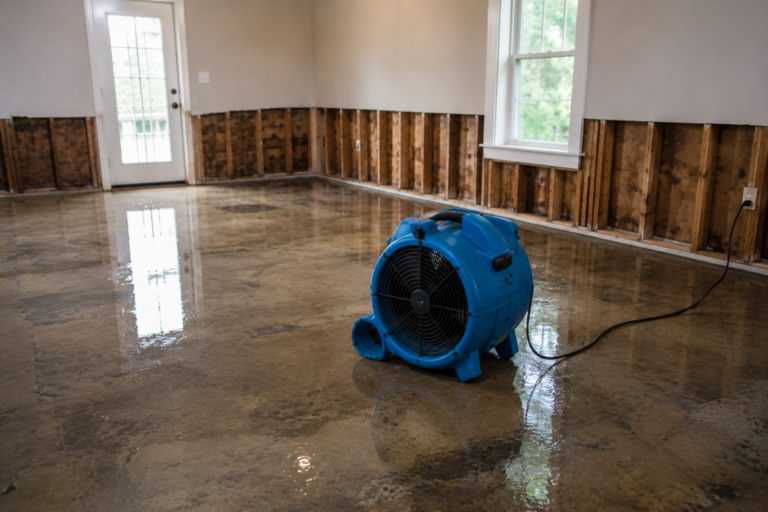
If you have already experienced a flood and are navigating a claim, our flood cleanup team produces documentation compatible with both NFIP adjuster review and private carrier claims processing. Our water damage restoration process ensures that the work is done to a standard your adjuster can approve without dispute.
Flood Zone and Insurance Questions
Go to the FEMA Flood Map Service Center at msc.fema.gov and enter your property address. The map will display your property’s flood zone designation. The result page also shows the effective date of the map, which tells you how current the data is. For properties near stream corridors, you can also zoom in to see the mapped floodplain boundary relative to your parcel. If you have questions about your specific designation or believe your property has been incorrectly mapped, a licensed engineer can file a LOMA (Letter of Map Amendment) with FEMA to request a revision.
You are not required to carry flood insurance in Zone X if your mortgage is federally backed, but that does not mean the risk is zero. Properties outside designated high-risk flood zones account for roughly 25 percent of all NFIP flood claims nationwide. On Oahu specifically, many documented flooding events have affected properties designated Zone X because heavy rainfall volumes exceeded what the flood zone boundaries were modeled to handle. If you are within any reasonable distance of a stream, drainage channel, or historically flood-prone area, flood insurance is worth pricing even in Zone X.
Yes. Flood patterns in Honolulu are highly localized because topography, lot grade, foundation height, and proximity to drainage channels vary dramatically from parcel to parcel. A neighbor who flooded last year may sit at a lower elevation or have a different drainage path than your property. Their flood event is relevant information about the area’s flood history, but it does not eliminate your risk. FEMA flood maps capture average probability over large areas; individual property outcomes depend on very specific site conditions that the maps do not resolve.
NFIP policies carry a standard 30-day waiting period from the application date before coverage takes effect. If you are purchasing coverage because a storm is forecast or a watch is issued, that coverage will not apply to the incoming event. The waiting period exists to prevent people from buying coverage only when a storm is imminent. Outside of certain mortgage-related purchase exceptions, the 30-day wait applies to all new NFIP policies. Private flood insurance carriers may have different waiting period terms, sometimes as short as 10 to 14 days, which is one reason some homeowners prefer private coverage.