7 Questions to Ask a Water Damage Company in Honolulu Before You Hire Them
The questions that separate a qualified restoration company from one that will cost you more in the long run.
Quick Answer
To choose a water damage restoration company in Honolulu, verify IICRC certification, active Hawaii contractor licensing, and proof of general liability insurance before signing anything. Ask how they document damage for your insurance adjuster, what drying equipment they use, and whether they have direct experience with Hawaii’s high-humidity drying conditions and local insurance carriers.
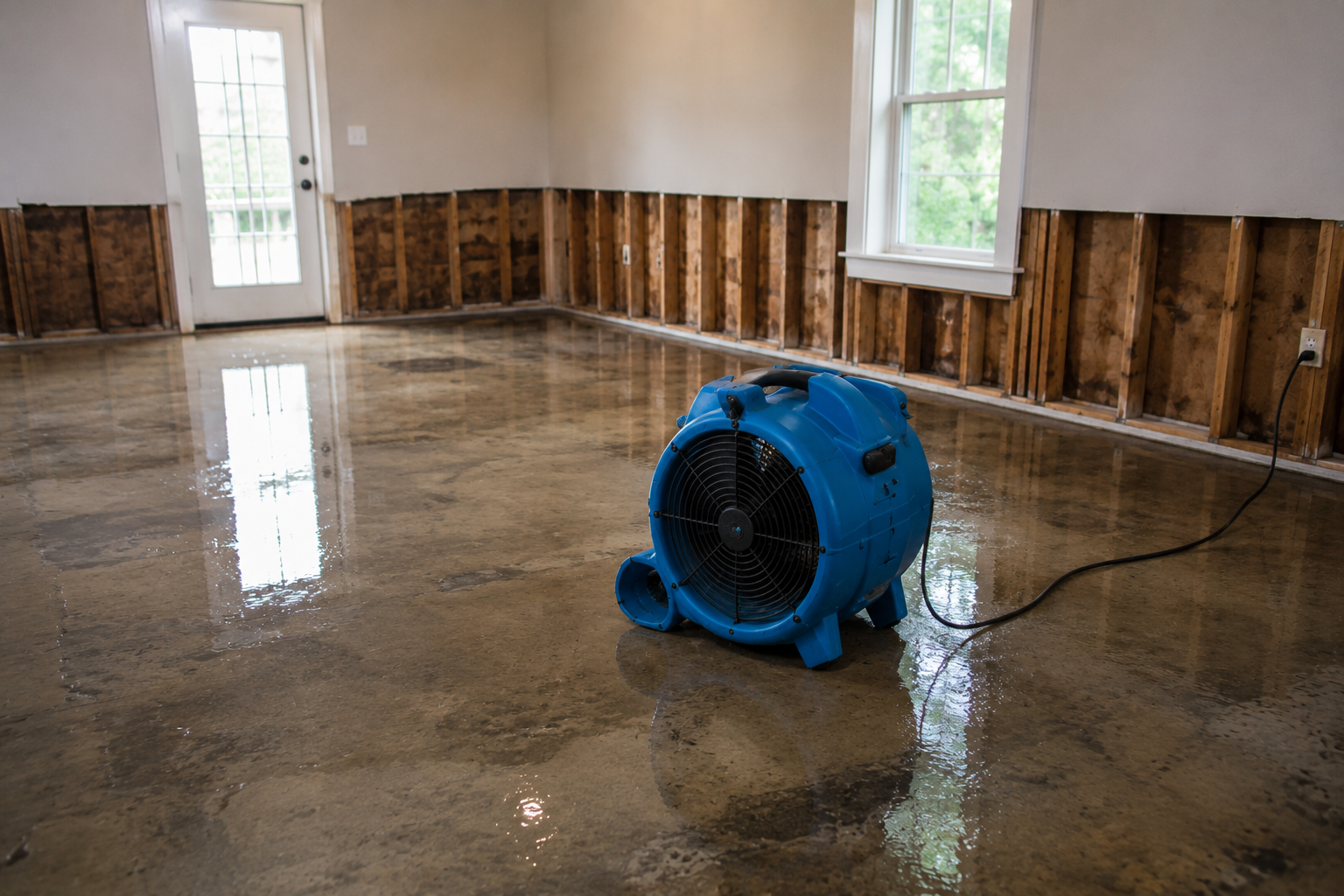
Honolulu has no shortage of companies that will show up after a flood or a pipe failure with a truck and some fans. What it has a shortage of is companies that can demonstrate proper certification, produce documentation that holds up during an insurance claim, and actually understand how Hawaii’s climate affects the drying process.
Choosing the wrong company costs you twice: once for the original job, and again when you discover the job was done incorrectly and you are dealing with mold or a disputed insurance claim months later. Ask these 7 questions before you agree to anything.
1. Are You IICRC Certified, and Which Certifications Does Your Team Hold?
IICRC certification is the professional standard for the restoration industry. The specific certifications to ask about are Water Damage Restoration (WRT) and Applied Microbial Remediation (AMRT) for mold. These certifications mean the technician has completed documented training, passed examinations, and is required to stay current through continuing education.
A company that cannot name the specific certifications held by the technicians who will work on your property is a company that likely does not hold them. Ask to see the certificates. A legitimate IICRC-certified firm will have them. Learn more about what IICRC certification means at iicrc.org.
2. Are You Licensed as a Contractor in the State of Hawaii?
Hawaii requires contractors performing restoration work above a certain dollar threshold to hold a valid state contractor’s license. An unlicensed contractor performing work on your property can void your homeowners insurance coverage and leaves you with no professional recourse if the work is done incorrectly. Ask for the license number. You can verify it through the Hawaii Department of Commerce and Consumer Affairs contractor license search.
Some national franchise companies send crews from the mainland for large disaster responses. Those crews may not be licensed in Hawaii. Ask specifically whether the technicians who will work on your property are operating under a Hawaii-licensed contractor entity.
3. What Documentation Will You Provide for My Insurance Claim?
This is one of the most important questions because the documentation package the restoration company produces directly determines how your insurance claim is processed. At minimum, ask for: timestamped photographs of all affected areas, moisture readings taken with calibrated meters, daily equipment logs showing dehumidifier and air mover placement and readings, and a line-item scope of work in Xactimate format.
A company that cannot describe its documentation process in specific terms is a company that does not produce adequate documentation. This will cause claim disputes down the road that you will have to manage on your own.
4. Do You Have Experience Working with Hawaii’s Climate and Local Insurance Carriers?
Water damage drying protocols that work in Atlanta or Phoenix do not work without adjustment in Honolulu. Hawaii’s year-round humidity means standard drying timelines are longer, standard dehumidifier capacities are inadequate, and moisture equilibrium targets must account for local ambient conditions. Ask how many jobs the company has completed in Honolulu specifically and whether their technicians understand psychrometric calculations for high-humidity environments.
On the insurance side, ask whether they have worked directly with First Insurance Company of Hawaii, Dongbu, USAA Hawaii, or other local carriers. Companies with no Hawaii-specific experience will not know the specific documentation formats or adjuster workflows that these carriers use, which creates friction during claims processing.
5. What Equipment Will You Use and Is It Commercial Grade?
There is a significant difference between the equipment a qualified restoration company brings and what you can rent from Home Depot. Ask about LGR (Low Grain Refrigerant) dehumidifiers specifically. LGR units remove two to three times more moisture per day than standard refrigerant dehumidifiers, which is critical in Hawaii’s high-humidity environment. Ask about industrial air movers and whether they use thermal imaging cameras for moisture mapping.
Equipment matters. A company that brings consumer-grade dehumidifiers to a flooded home in Honolulu will extend the drying timeline significantly and may not achieve adequate drying before mold begins to grow. This creates liability that ultimately falls on you as the homeowner.
6. How Do You Handle Insurance Billing and What Is My Out-of-Pocket Cost?
Reputable restoration companies bill insurance carriers directly. You should not be required to pay the full restoration cost up front and then seek reimbursement from your insurer. Ask whether the company will bill your carrier directly and what your expected out-of-pocket cost is beyond your deductible.
Be cautious of any company that asks you to sign over your insurance claim or that pressures you to agree to work before they have assessed the scope. Assignment of benefits arrangements can complicate your claim and limit your ability to dispute work quality.
7. Can You Provide References from Jobs Completed in Honolulu Within the Last 12 Months?
A company that cannot provide local references from recent Honolulu jobs has not done enough local work to be confident in their Hawaii-specific processes. This matters because the specific challenges of restoration work in Hawaii, the climate, the housing types, the insurance market, and the local supplier relationships, require real experience on the island, not just a general restoration background.
When you check references, ask specifically about documentation quality, insurance coordination, and whether the referring homeowner had any post-remediation moisture or mold problems. A qualified company’s work should produce no callbacks. See our About page for background on Honolulu Water Damage’s team and local experience, and our water damage restoration service page for details on our process.
Red Flags to Watch For
These are the signs that a company is not the right choice for your Honolulu water damage job.
- Cannot name specific IICRC certifications held by their technicians
- Asks you to sign an assignment of benefits before the scope is defined
- Cannot describe their documentation process in specific terms
- Provides an estimate over the phone without seeing the property
- Cannot provide a Hawaii contractor license number on request
- Arrives with consumer-grade dehumidifiers or box fans only
- Pressures you to decide immediately before you have compared options
Choosing a Water Damage Company
You can verify a contractor’s license through the Hawaii Department of Commerce and Consumer Affairs (DCCA) online license search at cca.hawaii.gov. Search by the company name or the license number they provide. A valid Hawaii contractor license will show as active with a current expiration date. Any restoration company performing work on your property for compensation should hold a valid Hawaii C or B contractor’s license depending on the scope of work.
Call the restoration company first to stop active damage and begin documentation. Then call your insurance carrier to open the claim. Your policy requires you to mitigate damage, which means taking reasonable steps to stop it from getting worse. Waiting to call a restoration company until after the insurance process begins adds days to the timeline and increases damage. A reputable restoration company will help you open the claim and can be on site before your adjuster arrives.
A restoration company specializes in extraction, drying, and damage mitigation, which is the emergency phase immediately after water intrusion. A general contractor handles reconstruction, which is the repair and rebuild phase after the structure is confirmed dry. You typically need both for a significant water damage event. The restoration phase must be completed and certified dry before reconstruction begins. Some restoration companies offer both services, but they are distinct phases of the recovery process.
National franchise companies can be competent, but experience specifically in Honolulu matters because Hawaii’s climate, housing stock, and insurance market differ significantly from mainland markets. Franchise technicians deployed from the mainland for disaster responses may not hold Hawaii contractor licenses, may not understand high-humidity drying adjustments, and may have no familiarity with local insurance carrier documentation requirements. Ask the specific questions from this article of any company, regardless of whether they are a franchise or independent.